
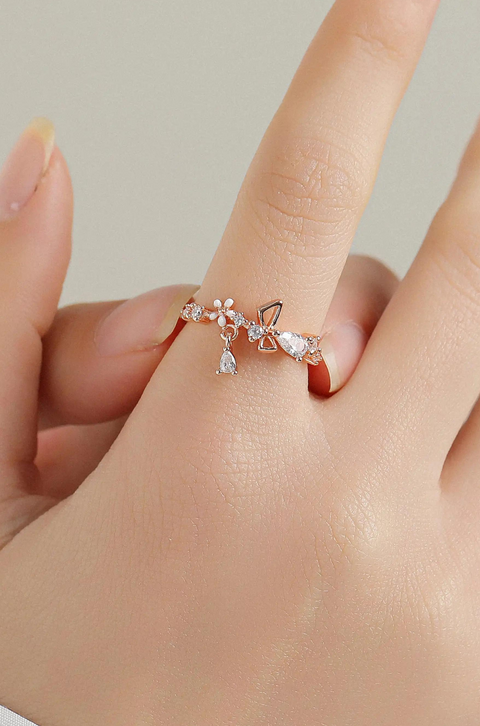


Wimsico product edit
Try both finishes before choosing a side
The silver vs. gold jewelry debate is one of the most common questions in personal style — and also one of the most misunderstood. Most advice defaults to "match your skin tone," but that rule is incomplete and often wrong. Here's a practical guide to deciding which metal tone works for your wardrobe, your lifestyle, and your personal style — backed by how jewelry actually reads on different people.
The Skin Tone Rule: What It Gets Right (and Wrong)
The conventional wisdom says: warm skin tones look better in gold, cool skin tones look better in silver. This is based on color temperature theory — warm-toned skin (yellow, olive, peachy undertones) is complemented by gold's warm yellow tones, while cool-toned skin (pink, blue, neutral undertones) is complemented by silver's cool grey-white tones.
That logic isn't wrong, but it's incomplete. Here's what the skin tone rule misses:
- Your wardrobe matters more than your skin. If you wear mostly cool-toned clothing — navy, grey, black, white — silver jewelry integrates more seamlessly regardless of skin tone. If your wardrobe runs warm — camel, olive, rust, cream — gold reads as intentional.
- The piece type changes the equation. A fine chain necklace reads differently than a chunky cuff. Thin gold chains look good on virtually everyone. Bold silver statement earrings require a stronger contrast to work.
- Lighting is a factor. Under warm indoor lighting, gold jewelry glows. Under cool daylight or office fluorescents, silver jewelry reflects more clearly. If you spend most of your day in a specific light environment, that should influence your choice.
How to Identify Your Skin's Undertone
If you want to use skin tone as one of your inputs, here's the most reliable way to identify your undertone:
The vein test: Look at the veins on your inner wrist in natural light. Blue or purple veins indicate cool undertones. Green veins indicate warm undertones. Blue-green veins suggest neutral undertones.
The jewelry test: Think back to which pieces you've received the most compliments on. If you consistently get comments when wearing gold earrings but not silver, that's practical evidence of what reads well on you — trust it over any theory.
The white vs. cream test: Hold a piece of pure white fabric and a piece of off-white or cream fabric near your face. If white makes you look washed out and cream looks better, you likely have warm undertones. If white looks fresh and cream looks muddy, you likely have cool undertones.
Gold Jewelry: Who It Works Best For
Gold jewelry — whether solid gold, gold-filled, or gold-plated — works strongly for:
- Warm and olive skin tones where gold creates continuity rather than contrast
- Dark skin tones where gold creates a striking, high-contrast look that photographs beautifully
- People who dress in earth tones, neutrals, and warm-spectrum colors
- Anyone who wants their jewelry to read as "warm" and approachable in tone
The 2026 gold jewelry landscape has expanded significantly. Gold-dipped jewelry offers the gold aesthetic at accessible prices, with strong everyday durability. Gold vermeil adds a thicker plating layer for pieces you plan to wear daily. The choice between these depends on how often you'll wear the piece and your care habits.
Gold works in virtually any weight category — from the thinnest cable chains to chunky chain-link statement pieces. If you're deciding between gold and silver for a first collection, gold is the lower-risk starting point because it pairs with more outfit palettes.
Silver Jewelry: Who It Works Best For
Silver jewelry — sterling silver, silver-plated, or white gold — works strongly for:
- Cool and neutral skin tones where silver echoes the skin's natural tones
- Fair and light skin tones where silver creates a clean, modern contrast
- People who wear mostly cool-toned or monochrome wardrobes
- Anyone who wants their jewelry to feel modern, minimal, and graphic
Silver also holds up better to highly polished, high-shine finishes than gold does — bright silver against fair skin in clean lighting photographs with more clarity. This is partly why silver jewelry is disproportionately popular in editorial fashion photography.
Sterling silver (marked .925) is the quality benchmark for silver jewelry. It's a stronger alloy than pure silver and holds its finish longer. Look for 925 sterling silver posts on earrings specifically, as the post material matters for skin sensitivity regardless of what the visible part of the earring is made of.
The Case for Mixing Metals
The old rule of "never mix gold and silver" is outdated. Mixed-metal jewelry is a mainstream styling move in 2026 — and when done right, it looks more sophisticated than staying rigidly within one metal tone.
Rules for mixing metals successfully:
- Anchor in one metal: Choose one dominant metal (usually gold) and use the second metal as an accent. A gold-dominant necklace stack with one silver ring reads as intentional. A 50/50 split can look accidental.
- Use one mixed-metal piece as a bridge: A two-tone piece (gold and silver in the same item) gives permission for the rest of your look to mix metals. It signals that the combination was deliberate.
- Keep the mixed metals in different zones: Mixing gold and silver at the same point (like all your necklaces) can look cluttered. Mixing at different zones — gold necklaces, silver rings — is cleaner.
Gold vs. Silver for Different Jewelry Types
The metal choice also interacts with the type of jewelry in ways worth considering:
Earrings: Gold earrings photograph better under warm lighting; silver earrings perform better under cool or daylight-equivalent light. For video content, gold is typically the stronger performer. For in-person events under natural light, silver holds its own equally.
Necklaces: Gold chain necklaces integrate more seamlessly with most skin tones for layered looks. Silver pendant necklaces can be slightly more graphic and statement-oriented. Our necklace collection carries both in comparable styles if you want to compare directly.
Rings: Rings are the category where skin tone matters least — rings are visible against your hand and finger, not against your skin and face. Mixed-metal ring stacks are the easiest place to experiment with combining gold and silver.
Bracelets: Gold bracelets read as warmer and more bohemian. Silver bracelets read as more minimal and modern. Bracelet style preference often reflects overall aesthetic direction more than skin tone.
How to Choose If You're Still Unsure
If you've considered skin tone, wardrobe, and lighting and still can't decide, here's a practical framework:
- Start with gold. Gold has broader wearability across more wardrobe types. If it doesn't work for you, you'll know quickly.
- Test with a high-visibility piece. Buy one pair of gold earrings and one pair of silver earrings in a similar style. Wear each for a week and see which earns more compliments and which feels more like "you."
- Let your wardrobe decide. Pull out your three favorite outfits. Which metal integrates better across all three? That's your answer.
Both gold and silver jewelry are right for someone. The goal isn't to follow a rule — it's to find which metal works consistently across your real lifestyle and wardrobe, then build from there.
Browse our best-selling jewelry in both gold and silver to compare styles side by side — most pieces are available in both finishes, so you can make the comparison directly.
Shop the story
Try both finishes before choosing a side
These pieces offer gold and silver options, so preference—not a rule—gets the final word.
Product availability and prices can change. The product page shows the current options before you add to cart.